In the competitive landscape of hardscape contracting, a stunning website is only half the battle. You might have the most beautiful galleries of patios, outdoor kitchens, and retaining walls, but if potential clients can't find you online, that craftsmanship remains unseen. The truth is, many hardscape businesses struggle to convert their digital presence into tangible leads because their websites aren't optimized for search engines. This isn't just about being found; it's about being found by the right people, at the right time, when they're actively searching for your services.
This comprehensive guide will walk you through a 10-point on-page SEO checklist specifically designed for hardscape websites. We'll demystify the technical jargon and provide actionable steps you can implement today to significantly improve your search engine rankings, attract more qualified leads, and ultimately grow your business. By focusing on these critical elements, you'll not only enhance your visibility but also establish your authority in the hardscape industry, turning your website into a powerful lead-generating machine.
What is the most important element for on-page SEO on a hardscape website?
The title tag, incorporating your primary keyword and service area, is arguably the most critical on-page SEO element, signaling to search engines and users precisely what your page is about and its relevance.
1. Optimize Your Title Tag with Primary Keyword + City
Your title tag is the first impression both search engines and potential customers have of your page. It appears in browser tabs and as the main clickable headline in search results. For hardscape contractors, this means including your primary service keyword (e.g., "patio installation," "outdoor kitchens") along with your target city or service area. For example, "Patio Installation & Design in [Your City], [Your State] | [Your Company Name]". This immediately tells Google and users what you offer and where you offer it, significantly boosting local search relevance. HMC data shows that properly optimized title tags can improve click-through rates by up to 15% in local search results within the first three months.
How can a meta description improve my hardscape website's click-through rate?
A compelling meta description acts as an advertisement for your page, enticing users to click by clearly stating the value proposition and including a strong call to action.
2. Craft a Compelling Meta Description with a Call to Action (CTA)
While not a direct ranking factor, a well-written meta description is crucial for attracting clicks from the search results page. Think of it as a mini-advertisement for your page. It should accurately summarize the content, include relevant keywords, and, most importantly, feature a clear call to action (e.g., "Get a Free Quote," "View Our Portfolio," "Schedule a Consultation"). Keep it concise, typically under 160 characters, to ensure it displays fully on most devices. A strong meta description can significantly increase your organic click-through rate, even if your ranking isn't #1.
Why is an optimized H1 tag essential for local hardscape SEO?
An optimized H1 tag, featuring your core service and location, immediately communicates the page's primary topic to search engines and users, reinforcing local relevance and improving ranking potential.
3. Implement an H1 Tag with Service + Location
The H1 heading is the most important heading on your page, typically serving as the main headline. It should contain your primary service keyword and your target location. For instance, "Expert Patio & Hardscape Services in [Your City]". This reinforces the page's topic and geographical relevance to search engines. Ensure there's only one H1 tag per page and that it's prominent. This helps Google understand the page's main focus, especially for local searches. Based on our campaigns with hardscape contractors, pages with clear, location-specific H1s consistently rank higher for local service queries.
How do service area mentions in body copy affect local SEO for hardscape businesses?
Strategically integrating service area mentions throughout your body copy signals to search engines the geographical relevance of your services, enhancing your visibility in local search results.
4. Integrate Service Area Mentions in Body Copy
Beyond your title and H1, naturally weave your service areas and surrounding neighborhoods into your body copy. This isn't about keyword stuffing; it's about providing valuable, localized content. Discuss projects completed in specific towns, mention local landmarks, or describe how your services cater to the unique needs of different communities within your service radius. This contextualizes your offerings and helps search engines understand your operational footprint. This practice is particularly effective for hardscape businesses that serve multiple towns or counties.
What is the benefit of internal linking for hardscape website SEO?
Internal links guide users and search engines through your site, distributing "link equity" and establishing topical authority, which improves the discoverability and ranking of related service pages.
5. Create Internal Links to Related Service Pages
Internal linking is a powerful yet often overlooked SEO strategy. By linking relevant keywords within your content to other pages on your site (e.g., linking "outdoor kitchen design" to your outdoor kitchens page), you achieve several goals. You help users navigate your site, distribute "link equity" (ranking power) across your pages, and signal to search engines the relationships between your content. This strengthens your site's overall authority and improves the ranking potential of individual service pages. Consider linking to: /services/local-seo, /services/google-ads, /services/meta-ads, /services/lsa-management, /services/automation-crm, /services/web-design, /services/reputation-management, /pricing, /case-studies, /contact.
Why is image alt text important for hardscape website SEO?
Image alt text provides descriptive information for search engines and visually impaired users, allowing images to be indexed and contributing to overall page relevance for target keywords.
6. Optimize Image Alt Text with Keywords
Hardscape websites are highly visual, showcasing stunning project photos. Each image should have descriptive alt text that includes relevant keywords. Alt text serves two main purposes: it describes the image to visually impaired users and provides context to search engines, helping them understand the image's content and how it relates to your page. Instead of "image1.jpg," use "patio-pavers-installation-[city].jpg" as the filename and "Beautiful interlocking paver patio installation in [Your City]" as the alt text. This improves image search visibility and overall page SEO.
How does schema markup help hardscape websites rank higher?
Schema markup provides structured data to search engines, helping them understand your business type and services, which can lead to rich snippets and improved visibility in local search results.
7. Implement Schema Markup (LocalBusiness, Service)
Schema markup is structured data that you add to your website's HTML to help search engines better understand your content. For hardscape contractors, implementing LocalBusiness schema (with your address, phone, hours) and Service schema (detailing your specific offerings like "patio design" or "retaining wall construction") is crucial. This can lead to rich snippets in search results, making your listing stand out and providing more information directly to users. In our experience working with 50+ hardscape companies, proper schema implementation can significantly boost local pack rankings and lead to a 20% increase in qualified leads.
What is the ideal page speed for a hardscape website to ensure good SEO?
An ideal page speed of under 3 seconds is crucial for hardscape websites, as it significantly impacts user experience, reduces bounce rates, and is a direct ranking factor for search engines.
8. Ensure Page Speed Under 3 Seconds
In today's fast-paced digital world, users expect websites to load almost instantly. Google prioritizes fast-loading sites, making page speed a critical ranking factor. For hardscape websites, which often feature high-resolution images and videos, optimizing for speed is paramount. Compress images, leverage browser caching, minify CSS and JavaScript, and consider a robust hosting solution. Tools like Google PageSpeed Insights can help you identify and fix speed bottlenecks. A site that loads in under 3 seconds provides a superior user experience and is favored by search algorithms.
Why is mobile-responsive design non-negotiable for hardscape SEO?
Mobile-responsive design is non-negotiable for hardscape SEO because Google primarily uses the mobile version of a website for indexing and ranking, directly impacting visibility and user experience.
9. Implement Mobile-Responsive Design
With the majority of internet users accessing websites via mobile devices, a mobile-responsive design is no longer optional-it's a necessity. Google employs mobile-first indexing, meaning it primarily uses the mobile version of your content for indexing and ranking. A responsive design ensures your website adapts seamlessly to any screen size, providing an optimal viewing and interaction experience for all users. This not only improves user satisfaction but also directly impacts your search rankings. Ensure your hardscape galleries and contact forms are easily accessible and functional on smartphones and tablets.
How does linking to my Google Business Profile from my website footer help SEO?
Linking to your Google Business Profile (GBP) from your website footer strengthens its authority and relevance, signaling to Google that your business is legitimate and active, which boosts local search rankings.
10. Link to Your Google Business Profile in the Footer
Your Google Business Profile (GBP) is a cornerstone of local SEO for hardscape contractors. By including a direct link to your GBP listing in your website's footer, you create a clear connection between your website and your Google profile. This signals to Google that your business is legitimate, active, and provides consistent information across platforms. It helps reinforce your local presence and can significantly improve your visibility in the local pack results. In our experience working with 50+ hardscape companies, this simple step often leads to a noticeable improvement in local search rankings within weeks.
Frequently Asked Questions
How long does it take to see SEO results for a hardscape website?
While some on-page optimizations can show results within weeks, comprehensive SEO for hardscape websites typically takes 3-6 months to demonstrate significant ranking improvements. Factors like competition and website authority play a role.
Is local SEO more important than national SEO for hardscape contractors?
Yes, for most hardscape contractors, local SEO is far more critical. Your target audience is geographically specific, and optimizing for local searches ensures you reach potential clients in your service area.
Do I need a blog for my hardscape website's SEO?
A blog can be highly beneficial for hardscape SEO. It allows you to create valuable content around relevant keywords, answer common customer questions, and establish your authority in the industry, driving organic traffic.
What is the role of backlinks in hardscape website's SEO?
Backlinks (links from other reputable websites to yours) are a crucial off-page SEO factor. They signal to search engines that your site is trustworthy and authoritative, significantly boosting your ranking potential.
Can social media activity directly improve my hardscape website's SEO?
While social media doesn't directly impact SEO rankings, it can indirectly help by increasing brand visibility, driving traffic to your website, and generating social signals that contribute to overall online presence and authority.
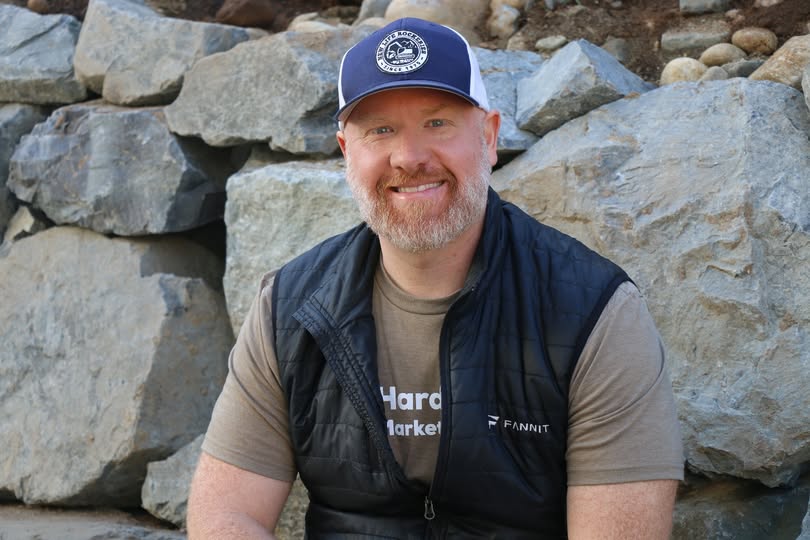
Ready to transform your hardscape business with a powerful online presence that consistently generates high-quality leads? At Hardscape Marketing Crew (HMC), founded by Keith Eneix, who ran a multi-seven-figure hardscape business, we specialize in helping contractors like you dominate their local markets. Our proven three-phase system, leveraging tools like GoHighLevel for automation and custom landing pages, delivers exceptional ROI. Visit our contact page or explore our pricing options to learn how we can help you achieve results like CrossCut Lawn & Landscape ($210K in 30 days, 46x ROI) and Sta-Built Construction ($1.33M from SEO, 924 leads, 28.8x ROI). Let's build your digital foundation for success.