Many hardscape business owners find themselves in a challenging position: the marketing strategies that propelled them to $500K in annual revenue suddenly stop working as they approach $2M. This isn't a sign of failure, but rather a common growth pain point. The tactics that work for a smaller, localized operation often become inefficient or even detrimental when attempting to scale. Understanding this transition is crucial for continued success.
What marketing strategies effectively grow a hardscape business to $500K in revenue?
Effective marketing strategies for hardscape businesses at $500K revenue often include local SEO, Google Business Profile optimization, and basic social media engagement to capture local demand.
At the $500K mark, hardscape contractors typically rely on foundational marketing efforts. This includes optimizing their Google Business Profile (GBP) to rank high in local search results, ensuring their website is discoverable through basic local SEO, and engaging with their community on social media. These strategies are highly effective for capturing immediate, localized demand and building a strong reputation within a specific service area. HMC data shows that businesses focusing on these core elements can achieve significant initial growth, often driven by strong word-of-mouth and repeat business from a loyal customer base.
Why do marketing strategies that succeed at $500K often fail or become liabilities when a hardscape business reaches $2M?
Strategies effective at $500K often lack scalability, automation, and sophisticated targeting, leading to inefficiencies and diminishing returns as a hardscape business approaches $2M.
The primary reason these early-stage strategies falter is a lack of scalability. As a hardscape business grows, the volume of leads required to sustain growth increases dramatically. Manual processes for lead follow-up, basic website traffic, and limited advertising reach become bottlenecks. For instance, relying solely on organic GBP leads, while cost-effective initially, cannot generate the consistent, high-volume leads needed for a $2M operation. Based on our campaigns with hardscape contractors, we've observed that businesses attempting to force $500K strategies onto a $2M goal often experience lead quality degradation, increased cost per acquisition, and a significant drain on internal resources. The marketing spend becomes less efficient, and the business owner often feels like they are buying their own job. This is precisely why HMC developed its three-phase system, designed to scale with a hardscape business's growth, moving from foundational local presence (Phase 1: GBP + LSA, $1,500/mo) to integrated digital campaigns (Phase 2: + Meta Ads + landing pages, $3,500/mo) and finally to a full-stack, comprehensive marketing leadership strategy (Phase 3: $7,500/mo).
What advanced marketing strategies should replace outdated tactics for hardscape businesses aiming for $2M and beyond?
Scaling hardscape businesses beyond $2M require advanced strategies like integrated PPC campaigns, robust CRM automation, conversion-focused landing pages, and strategic content marketing.
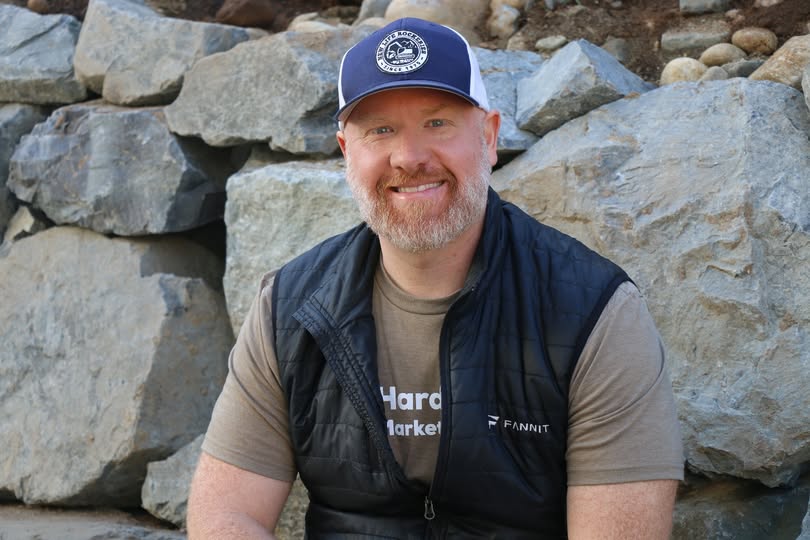
To break through the $2M barrier, hardscape companies must adopt a more sophisticated, integrated marketing approach. This includes investing in targeted Google Ads and Meta Ads campaigns that are meticulously optimized for conversion, not just clicks. Implementing a robust CRM and automation system is critical for efficient lead nurturing and follow-up, ensuring no valuable lead is lost due to slow response times. Furthermore, developing high-converting landing pages tailored to specific services and campaigns significantly improves ROI. In our experience working with 50+ hardscape companies, those that successfully scale past $2M prioritize these advanced strategies, moving away from a reactive, piecemeal approach to a proactive, data-driven marketing leadership strategy. For example, clients like West Edge Landscapes achieved $750K in 6 months with a 132x ROI by implementing a comprehensive, scalable marketing system. This shift allows for predictable growth and frees up the business owner, as exemplified by HMC founder Keith Eneix, who transitioned from running a multi-seven-figure hardscape business to helping others scale through strategic marketing.
Frequently Asked Questions
What is the primary difference between marketing strategies for a $500K and a $2M hardscape business?
The primary difference lies in scalability and sophistication. Strategies for a $500K business often focus on local, foundational tactics like GBP optimization, while a $2M business requires integrated campaigns, automation, and advanced analytics to handle higher lead volumes and maintain efficiency.
How can a hardscape business avoid marketing bottlenecks when scaling?
To avoid bottlenecks, businesses should proactively transition from manual, localized efforts to automated, data-driven systems. This includes investing in robust CRM, targeted PPC campaigns, and conversion-optimized landing pages that can support increased demand without sacrificing lead quality or efficiency.
What role does automation play in scaling hardscape marketing?
Automation is crucial for scaling by streamlining lead nurturing, follow-up, and customer communication. It ensures consistent engagement, reduces manual workload, and allows sales teams to focus on qualified leads, ultimately improving conversion rates and overall marketing ROI.
Why are conversion-focused landing pages important for growing hardscape companies?
Conversion-focused landing pages are vital because they are designed to guide visitors towards a specific action, such as requesting a quote. They provide a tailored experience that aligns with ad campaigns, significantly increasing the likelihood of converting traffic into qualified leads compared to generic website pages.
What is HMC's three-phase system for scaling hardscape businesses?
HMC's three-phase system is a structured approach to marketing growth. Phase 1 focuses on local presence (GBP + LSA), Phase 2 adds integrated digital campaigns (Meta Ads + landing pages), and Phase 3 provides a full-stack marketing leadership strategy, each designed to support increasing revenue milestones.